
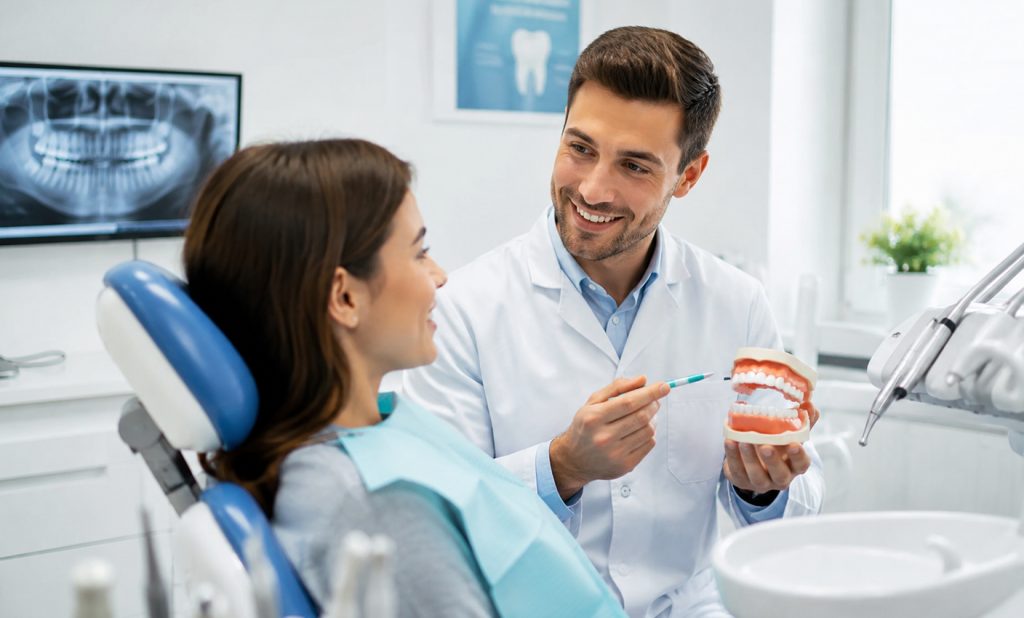
If someone in Elk Grove wants straighter teeth, they can choose from several proven braces options—from traditional metal brackets to clear ceramic braces and removable Invisalign aligners—each suited to different goals, budgets, and lifestyles. A local orthodontic team will assess bite issues, cosmetic priorities, and cost preferences to recommend the best braces solution for lasting results.
Expect a clear explanation of how each option works, what treatment feels like day-to-day, and how payment plans or insurance may affect choices. The article walks through practical differences, comfort tips, and what to expect during and after treatment so decisions feel confident and comfortable.
Understanding Orthodontic Treatment
This section explains practical reasons for straightening teeth and common worries patients have about braces. It focuses on health benefits, appearance, treatment timelines, and everyday impacts like eating and oral hygiene.
Why Straightening Teeth Matters
Straight teeth reduce areas where plaque hides, which lowers the risk of cavities and gum disease. Properly aligned teeth distribute biting forces evenly, helping prevent uneven wear, jaw pain, and future tooth fractures.
Aesthetic changes often boost confidence, but the clinical benefits matter most for long-term oral health. Correcting crowding and bite problems can improve chewing efficiency and speech clarity in measurable ways.
Early alignment in children can guide jaw growth and sometimes shorten later treatment. For adults, modern options like clear aligners or ceramic braces offer effective correction with less visual impact than traditional metal brackets.
Common Concerns About Braces
Pain and discomfort usually appear in the first few days after adjustments or when starting a new aligner stage. Over-the-counter pain relievers, orthodontic wax, and soft foods typically manage symptoms within a few days.
People worry about treatment length; most cases finish between 12 and 24 months, but minor corrections can take as little as 6 months. Treatment time depends on severity, patient age, and how consistently they follow instructions such as wearing elastics or aligners.
Cost and appearance are frequent questions. Insurance, flexible payment plans, and a range of options—from metal braces to clear aligners—help balance budget and aesthetic preferences. Regular checkups and good oral hygiene ensure efficient progress and reduce the chance of setbacks.
Traditional Metal Braces
Traditional metal braces remain a reliable, widely used option that delivers predictable tooth movement and strong control over alignment. They combine metal brackets, archwires, and elastic ties to correct crowding, gaps, and bite issues across a wide age range.
How Metal Braces Work
Metal brackets bond to each tooth and connect with a shaped metal archwire that applies continuous, gentle force. The orthodontist adjusts the archwire at regular visits to guide teeth into the planned positions over time.
Elk Grove practices typically use stainless steel or low-profile nickel-titanium wires that maintain springiness even after repeated adjustments. Elastic ligatures or self-ligating brackets hold the wire in place; elastics can be replaced with colored ties for personalization.
Treatment planning begins with digital X-rays and intraoral scans to map tooth movement. Appointments every 4–8 weeks allow the provider to change wires, tweak forces, and monitor root and bite changes to keep progress predictable and safe.
Benefits for Teens and Adults
Metal braces correct complex problems—severe crowding, rotated teeth, and significant bite discrepancies—that clear aligners sometimes cannot handle. They offer precise bracket placement and stronger force application, which can shorten treatment time for difficult cases.
For teens, braces provide durability against rough play and limited need for patient compliance. Parents appreciate consistent results without requiring daily removal and tracking.
Adults benefit from modern low-profile brackets and more discreet wire options; many Elk Grove offices offer tooth-colored ties or ceramic alternatives for visible teeth. Insurance and flexible payment plans often cover a portion of the cost, making metal braces an accessible, cost-effective choice.
Clear and Ceramic Braces
Clear and ceramic braces combine nearly invisible materials with the reliable tooth-moving power of traditional braces. They prioritize a low-profile look while treating moderate to complex alignment problems, and require slightly different care than metal brackets.
Discrete Appearance Explained
Ceramic brackets use tooth-colored or translucent materials that blend with enamel, making braces less noticeable in photos and daily conversation. Clear brackets sit on the teeth and are paired with tooth-colored wires or low-visibility metal wires to further reduce contrast.
Because ceramic is more brittle than metal, manufacturers design brackets with rounded edges and lower profile shapes to reduce irritation and breakage. Some ceramic systems use metal archwires at the start for stronger movement, then switch to tooth-colored wires for esthetics.
Patients should know ceramic brackets can stain at the tie or elastic points if they choose colored elastics or consume dark beverages regularly. Modern elastic-free or self-ligating ceramic options reduce staining and friction. Orthodontists in Elk Grove typically show before-and-after photos of ceramic cases so patients can set realistic expectations about appearance during treatment.
Ideal Candidates
Patients seeking a discreet option for visible front teeth often choose ceramic braces, especially adults and image-conscious teens. They work well for crowding, gaps, and many bite issues, though severe jaw discrepancies may still require metal braces or surgical approaches.
People who grind teeth or participate in contact sports should discuss ceramic suitability because ceramic brackets are more chip-prone than metal.
Candidates who prioritize esthetics but need the control of fixed appliances—rather than removable aligners—benefit most. Those with strict oral hygiene habits make better candidates since ceramic systems demand consistent cleaning to avoid staining and maintain gum health.
Care and Maintenance Tips
Brush after every meal using a soft-bristled brush and fluoride toothpaste to remove plaque around ceramic brackets. Use interdental brushes or a water flosser to clean under archwires and between brackets where regular brushing misses.
Avoid sticky, hard, or highly pigmented foods and drinks—like caramel, hard candy, coffee, and red wine—to reduce staining and bracket stress. If elastics are part of the plan, replace them as directed; stained elastics are cosmetic and can be swapped at appointments.
Attend regular adjustment visits so the orthodontist can check for ceramic wear or microfractures and change wires when needed. Report any bracket loosening promptly; timely repairs prevent treatment delays. For personalized guidance, patients can ask their Elk Grove orthodontist about specific ceramic brands and maintenance routines that match their lifestyle.
Invisalign and Removable Aligners
These options use clear, removable trays to shift teeth with less visibility and more daily flexibility. They affect treatment time, eating habits, and how often patients must visit the office.
Overview of Clear Aligners
Clear aligners are custom-made, BPA-free plastic trays that fit over the teeth and move them through a series of planned stages. Each set wears about 1–2 weeks before switching to the next; a dentist or orthodontist in Elk Grove scans the teeth and designs the full sequence with digital planning software.
Aligners treat many mild-to-moderate alignment issues: spacing, crowding, and some bite problems. Complex cases—severe rotations, large bite corrections, or very small teeth—may still require braces or attachments like elastics and composite bumps to achieve the needed forces.
Compliance matters: patients should wear aligners 20–22 hours per day for best results. Missing wear time lengthens treatment and can require refinements or additional sets.
Treatment Timeline Expectations
Initial consultation includes a digital scan, X-rays if needed, and a proposed treatment plan with estimated duration. Typical adult treatment spans 6–18 months, while simpler cases can finish closer to six months; teenagers may have slightly different timelines due to growth and eruption patterns.
Appointments usually occur every 6–10 weeks to monitor progress and receive multiple sets at once. Mid-treatment refinements happen when tooth movement deviates from the plan; those adjustments may add weeks to months depending on the correction required.
Retention follows active treatment; patients move to retainers—often clear or bonded—to prevent relapse. For predictable outcomes, factor in periodic follow-ups and potential replacement retainers over the years.
Lifestyle and Eating with Aligners
Patients remove aligners to eat and drink anything besides water, which prevents staining and distortion from hot liquids. Brushing and flossing after meals before reinserting aligners reduces decay risk and keeps trays fresh.
Aligners allow clearer speech and social comfort compared with traditional braces but may cause a short adjustment period with slight lisps for a few days. Activities like sports require a custom mouthguard over the aligners or removal with proper storage to avoid damage.
Cleaning is simple: rinse trays daily, brush them gently with a soft toothbrush, and use cleaning crystals or a mild soap as directed. Proper care prevents odors, discoloration, and bacterial buildup, preserving fit and hygiene throughout treatment.
Cost Factors and Payment Options
Treatment cost varies by chosen appliance, case complexity, and treatment length. Patients should expect detailed estimates that list appliance fees, office visits, and potential auxiliary procedures like extractions or retainers.
Insurance Considerations
Many dental plans in Elk Grove, CA, offer partial orthodontic coverage for children and sometimes adults. Typical policies cover 25–50% of orthodontic treatment after a deductible, with lifetime maximums commonly between $1,000 and $3,000. Patients should verify whether their plan requires pre-authorization, has an age limit, or lists in-network providers to maximize benefits.
For accurate cost-sharing, the practice can submit a pre-treatment estimate (pre-authorization) that outlines expected insurer payments. Patients should confirm waiting periods and whether benefits apply to specific options like clear aligners, ceramic brackets, or lingual braces. If coverage is unclear, an insurance coordinator at the office can call the carrier, explain procedure codes (e.g., D8080 for comprehensive orthodontics), and provide a written benefits summary.
Flexible Financing Plans
Many Elk Grove practices offer in-house payment plans or partner with third-party lenders to spread payments over 6–60 months. Typical options include 0% interest for shorter terms (6–12 months) or low-interest plans for longer terms; an example is a 24–48 month plan with fixed monthly payments and a modest finance charge.
Patients often pay a down payment (commonly 10–20% of total) with the remainder split into monthly installments. Practices may also accept credit cards, CareCredit, and HSAs or FSAs for eligible expenses. Clear written agreements should state total cost, payment due dates, late fees, and refund policies for early treatment termination.
Choosing the Right Solution for You
This section explains how individualized goals, budget, and lifestyle guide the choice of braces and what to expect during the first visits. It highlights how a treatment plan maps timeline, costs, and appliance selection, and how the consultation clarifies risks and next steps.
Personalized Treatment Planning
The orthodontist evaluates bite alignment, crowding, jaw relationship, and facial profile using digital x-rays, 3D scans, and intraoral photos. They then match findings to options — metal braces for complex movement, ceramic for a less visible look, lingual braces when concealment is essential, or clear aligners for mild–moderate corrections and convenience.
Treatment timelines and mechanics vary: metal and ceramic braces often require 12–24 months; lingual braces can be similar but may need extra adjustment visits; clear aligners need patient compliance and typically change trays every 1–2 weeks. Cost estimates include appliance fees, imaging, periodic adjustments, and potential retreatment; payment plans and insurance coverage are discussed upfront. The plan also lists sensitivity management, expected dietary changes, and oral hygiene steps so patients know daily responsibilities.
Consultation Process
The initial visit takes about 45–60 minutes and starts with a full dental and medical history, then proceeds to targeted imaging and a bite analysis. The orthodontist reviews diagnostic records with the patient, explains each appliance’s benefits and trade-offs, and shows projected tooth movement using simulation software when available.
Patients receive a written treatment outline with estimated duration, number of adjustment visits, total cost, and financing options. The team answers questions about pain control, school or work accommodations, and emergency contacts. After consent, scheduling begins and the clinic provides pre-treatment instructions, such as cleaning protocols or corrective extractions if needed.
Life During Orthodontic Treatment
Patients can expect an adjustment period with mild soreness, dietary changes, and a focused cleaning routine. Simple tools and small habit changes make daily life with braces manageable and keep treatment on schedule.
Comfort Tips and Adjusting to Braces
Most patients feel pressure or soreness for 3–7 days after an adjustment. Over-the-counter pain relief like ibuprofen or acetaminophen and cold compresses help during peak discomfort. Orthodontic wax placed over brackets prevents cheek and lip irritation; replace wax as needed and carry a small kit for school or work.
Eating softer foods for the first few days reduces pain and avoids bracket damage. Favor cooked vegetables, mashed potatoes, yogurt, and smoothies. Avoid hard, sticky, or chewy items—such as nuts, hard candy, beef jerky, and caramel—until the orthodontist clears them.
Speech often normalizes within a week for most patients. If elastics or appliances affect talking, practice reading aloud and use smaller, frequent elastic wear to adapt. Keep appointment schedules and follow specific instructions about wearing elastics or headgear; inconsistent wear slows progress.
Oral Hygiene Routines
Brushing after every meal prevents plaque buildup around brackets and reduces risk of decalcification. Use a soft-bristled brush angled at 45 degrees to clean above and below brackets, brushing for two minutes each session. An interdental brush or proxabrush cleans between wires and under brackets better than a standard brush alone.
Flossing daily with a floss threader or orthodontic flosser removes debris between teeth and lowers gum inflammation. Rinse nightly with an ADA‑approved fluoride mouthwash to strengthen enamel and reduce cavities during treatment.
Schedule professional cleanings every 3–6 months and attend all orthodontic checkups. The orthodontist will monitor tooth movement and spot early signs of white spots or gum irritation. Consistent hygiene and prompt reporting of loose brackets or persistent soreness keep treatment on track and protect long-term oral health.
Post-Treatment Care and Retainers
Proper care after braces prevents relapse and keeps teeth healthy. Patients should understand retainer types, wear schedules, cleaning routines, and when to contact the orthodontist.
Keeping Your Smile Straight
Retention depends on the retainer type and patient habits. Fixed (bonded) retainers are thin wires glued behind lower or upper front teeth; they keep alignment continuously but require careful flossing with a floss threader or interdental brushes to prevent plaque buildup. Removable retainers come as clear plastic (Essix) or acrylic with a metal clasp (Hawley); Essix retainers offer better aesthetics while Hawleys allow minor bite adjustments.
Typical wear schedules start with full-time use for 3–6 months, then transition to nightly wear. Consistency in the first year is crucial because teeth shift most after braces. If a retainer breaks, becomes loose, or feels bent, patients should contact their orthodontist immediately to avoid movement. Keep spare removable retainers when possible to prevent gaps in wear.
Long-Term Maintenance
Long-term retention often means nightly wear for several years or indefinitely, depending on age and original alignment. Adults and patients with significant pre-treatment crowding usually benefit from lifelong nighttime wear to maintain results. Orthodontists may recommend periodic checkups—typically every 6–12 months—to verify fit and monitor oral health.
Cleaning routines differ by retainer type: soak removable retainers weekly in a non-alcoholic cleaner and brush gently with a soft toothbrush daily; avoid hot water that warps plastic. For bonded retainers, schedule professional cleanings and use floss threaders daily. Keep retainers in a labeled case when not worn and avoid heat exposure from cars or dishwashers. If discomfort or movement occurs, call the orthodontic office promptly to arrange evaluation or replacement.
Meet Your Elk Grove Orthodontic Team
The Elk Grove orthodontic team greets patients with warmth and clear expertise. They focus on listening first, so every treatment plan reflects each person’s goals and lifestyle.
The team includes licensed orthodontists, skilled hygienists, and patient care coordinators. Together they explain options like traditional braces, clear aligners, and ceramic brackets in plain language.
They prioritize comfort during visits and use modern technology such as digital scans and 3D treatment planning. These tools reduce chair time and help patients see expected results before treatment begins.
Staff members take time to answer common questions about pain control, dietary limits, and oral hygiene. They offer practical tips for cleaning around braces and keeping aligners clear.
A simple table introduces key team roles and what patients can expect:
| Role | What they do |
|---|---|
| Orthodontist | Designs and oversees treatment; adjusts braces and aligners. |
| Hygienist/Assistant | Helps with cleanings, checks, and patient comfort. |
| Coordinator | Schedules appointments and guides insurance/financial plans. |
They create a calm, friendly environment for children and adults alike. Patients are encouraged to ask questions at any visit and to schedule a consultation to explore which braces option fits them best.
Next Steps Toward a Confident Smile
They can start by scheduling a consultation with a trusted Elk Grove orthodontist to review goals, medical history, and budget. Appointments usually include an exam, X-rays, and a clear explanation of recommended options.
Patients should ask specific questions about treatment length, comfort measures, and follow-up care. They can request photos or models to visualize expected results and compare braces, clear aligners, and lingual options.
Insurance and financing often affect choice; the practice staff can help verify benefits and outline payment plans. Many offices offer flexible monthly plans and will estimate out-of-pocket costs before treatment begins.
Preparation makes treatment smoother: maintain good oral hygiene, bring a list of medications, and follow pre-appointment instructions. For aligners, bring recent photos; for braces, expect an adjustment of diet for a few days.
During treatment, regular check-ups keep progress on track and catch issues early. The team will show how to clean around appliances and recommend products to reduce irritation and prevent cavities.
They should feel comfortable asking about pain control, emergency contacts, and retention after active treatment. A short call or online booking will move the process forward; most practices provide easy ways to set an initial visit and start personalized planning.
Frequently Asked Questions
This section addresses common patient concerns about costs, appliance types, care decisions, discreet adult options, TMJ links, and safety considerations for bone-loss conditions. Answers give specific price ranges, choice criteria, referral cues, low-profile alternatives, realistic TMJ outcomes, and precautions for osteopenia.
How much do braces typically cost in California, and what factors can change the price?
In Elk Grove and surrounding areas, full orthodontic treatment typically ranges from $3,500 to $8,500. Metal braces tend to fall toward the lower end, clear ceramic or lingual options toward the higher end, and Invisalign commonly sits in the $4,000–$7,500 band.
Several factors change price: treatment complexity, treatment length, appliance type, provider experience, and whether surgical or multidisciplinary care is required. Insurance coverage, available in-network dentists, and monthly payment plans or in-office financing also affect out-of-pocket cost.
What’s the difference between traditional metal braces, clear braces, and Invisalign—and how do I choose?
Traditional metal braces use metal brackets and wires and work well for complex tooth movements; they are usually the most economical. Clear ceramic braces use tooth-colored brackets for a less visible look but can be slightly more fragile and cost more.
Invisalign uses a series of clear removable aligners best suited for mild-to-moderate crowding or spacing and offers easier oral hygiene. Choice depends on case complexity, cosmetic priority, patient discipline with removable appliances, and budget; an orthodontic consultation will provide a personalized recommendation.
How do I know if I should see an orthodontist instead of a general dentist for straightening my teeth?
Refer to an orthodontist when tooth movement involves bite correction, jaw alignment, impacted teeth, or surgical coordination. General dentists can manage minor alignment with clear aligner programs, but complex skeletal or occlusal problems require specialist training.
If a general dentist recommends treatment that feels uncertain or involves significant bite change, seeking an orthodontic second opinion helps ensure the right plan and predictable results.
Are there comfortable, low-profile braces options for adults who don’t want a noticeable look?
Yes. Clear ceramic braces and tooth-colored brackets provide reduced visibility while using fixed appliances for consistent control. Lingual braces attach to the tongue-side of teeth, making them nearly invisible, though they can require a short adaptation period for speech and tongue comfort.
Clear aligners like Invisalign offer a removable, nearly invisible option with minimal speech change and typically better comfort for soft tissues. Adults should discuss wear-time expectations and lifestyle needs with the provider to choose the best low-profile option.
Can orthodontic treatment help with TMJ symptoms like jaw pain or clicking?
Orthodontic treatment can improve bite relationships that contribute to TMJ symptoms in some patients. If misalignment is a clear mechanical contributor to jaw strain, correcting the occlusion may reduce pain, clicking, and muscle tension.
However, TMJ disorders have multiple causes—arthritis, trauma, muscle hyperactivity—so orthodontics is not a guaranteed cure. The provider should evaluate TMJ symptoms first and consider conservative therapies (nightguards, physical therapy) before or alongside tooth movement.
Is it safe to get braces if I have osteopenia, and what precautions might be needed?
Braces can often be placed in patients with osteopenia, but bone density affects tooth movement rate and alveolar bone response. The orthodontist should review bone health, medications (especially bisphosphonates or denosumab), and recent DEXA results.
Precautions include slower planned tooth movements, closer monitoring of root and bone integrity on radiographs, coordination with the patient’s physician or endocrinologist, and considering less invasive options if antiresorptive therapy is active.